
Home Inventory Checklist: What to Record in Every Room
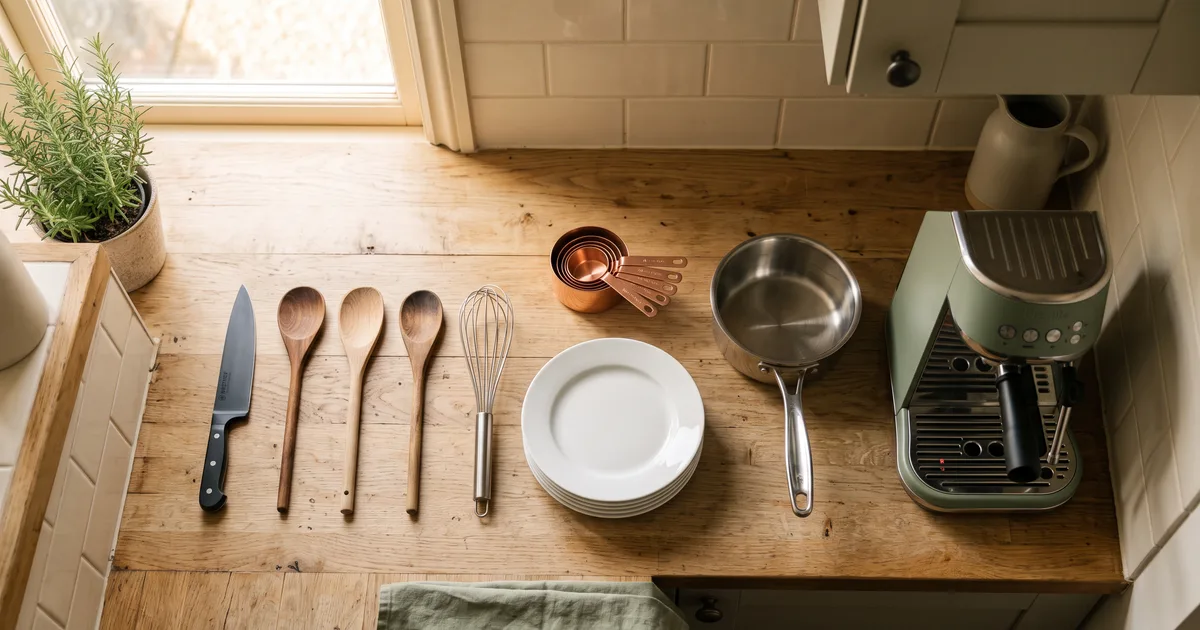
A home inventory checklist is a room-by-room list of everything you own, with a photo, a rough value and any receipt or serial number for each item. Working through it one room at a time is a practical way to build a record your insurer can use after a fire, flood or theft.
Picture standing in the driveway after a kitchen fire, trying to list from memory everything that was in the cupboards. Most people can't, and many never try before they have to: the Oklahoma Insurance Department's inventory guide, published in 2023, notes that research suggests almost half of Americans don't keep an inventory of their possessions.
How do you use a home inventory checklist?
You use a home inventory checklist by going through your home one area at a time, photographing everything, then filling in the details for anything worth more than a few dollars to replace. Photos come first because they capture far more than you would ever type, including items you forget you own.
Start somewhere small so you finish something on day one. Triple-I's guide suggests a contained spot such as a closet or a cabinet, or starting with recent purchases and working back. Then:
- Take one wide photo of the room from each corner.
- Open every drawer, cupboard and closet and photograph the contents.
- Take close-ups of anything valuable, plus its serial number or model label.
- Write the details for each item, room by room, while the photos are fresh.
An incomplete inventory is still far better than none. Two finished rooms this weekend beat a perfect plan you never start.
Room-by-room home inventory checklist
Every room has its obvious items and its forgotten ones. The forgotten ones are where claims come up short, because nobody remembers the contents of the hall closet after a loss. Use this table as your walk-through guide.
| Area | Easy to remember | Easy to forget |
|---|---|---|
| Kitchen | Fridge, stove, dishwasher, microwave | Small appliances, cookware, knives, dishes, pantry food |
| Living room | Sofa, TV, speakers, rug | Game consoles and games, books, framed art, lamps, throws |
| Bedrooms and closets | Beds, dressers, mattresses | Clothing, shoes, handbags, watches, bedding, luggage |
| Bathrooms | Vanity items, towels | Hair tools, electric toothbrushes, medicine cabinet contents |
| Home office | Computer, monitor, desk, chair | Printer, chargers, hard drives, software licenses, supplies |
| Garage, basement and attic | Workbench tools, freezer, washer and dryer | Seasonal decor, sports gear, bikes, camping gear, power tools |
| Outdoors | Grill, patio furniture | Lawn mower, hoses, planters, kids' play sets, shed contents |
Kitchen and dining
Kitchens are full of small items that are easy to forget. Photograph each cabinet and drawer open, then list sets as one line, such as "service for 8, white dinnerware". Note brand and model for appliances, which you can find on a label inside the door or on the back.
Bedrooms and closets
Clothing adds up quickly and is hard to prove later. Count it by category rather than piece by piece, for example "12 work shirts, 4 coats, 6 pairs of shoes", and photograph each closet with the doors open. Single out anything expensive, such as a designer coat or a watch.
Garage, basement and attic
These are the spaces people skip, and they often hold tools, bikes and sports equipment that cost a lot to replace. Photograph shelves and bins with the lids off. Record serial numbers on power tools and bikes, which also helps after a theft.
What details should you record for each item?
For each item worth listing, record a short description, the brand and model, where you bought it, roughly when, what you paid, and the serial number if it has one. The Triple-I guide recommends noting any detail that might help in the event you need to make a claim.
That level of detail is often exactly what an insurer asks for. In United Policyholders' 2026 wildfire survey of 675 households affected by the 2025 Eaton and Palisades fires in Los Angeles, 53% said their insurer required them to list and describe every damaged or destroyed item. Building that list after a loss, from memory, is far harder than keeping it now. (Severe weather is also one reason home insurance costs are rising.) Attach proof as you go:
- Photos you took yourself. One of the whole item and one of the model or serial label.
- Receipts or order emails. Photograph paper receipts, which fade.
- Bank or card statements. Useful proof of purchase when the receipt is gone.
- Appraisals. For jewelry, art and collectibles.
You don't need all of these for every item. A clear photo and a rough price are enough for most household goods. Save the full set of details for electronics, appliances, furniture, jewelry and anything else that would be expensive to replace.
Which items need extra attention?
High-value items need more proof and sometimes more coverage. The Triple-I guide points out that jewelry, art and collectibles may have increased in value and may need special coverage separate from a standard homeowners policy. Many policies also set lower limits for categories like these, so ask your agent what applies to yours.
Give extra attention to:
- Jewelry and watches. Photograph each piece with any hallmark or engraving visible, and keep appraisals.
- Electronics. Record serial numbers; they are usually on the back or bottom.
- Art and collectibles. Photograph signatures and certificates of authenticity.
- Musical instruments, bikes and sports gear. Record the model and serial number, which also helps police after a theft.
- Items in storage. List them as their own location so they aren't forgotten.
How do you keep a home inventory up to date?
You keep a home inventory current by adding new purchases as you buy them and reviewing the whole list once a year. The Maine Bureau of Insurance advises updating the checklist when you make new purchases and keeping it in a safe, fire-proof place. A good habit is to review it at your policy renewal.
Store at least one copy away from home: a cloud account, a safe deposit box or a relative's house. If you use an app, make sure it backs up your data and that you can get to it from any device. In Claimfrog, for example, photos you take are stored as originals and the inventory stays in the cloud, so it survives even if your phone and computer don't.
Once your list has values, compare the total with your personal property coverage. If you're not sure what your belongings are worth, a room-by-room contents estimate gives you a starting number to discuss with your agent.
Frequently asked questions
How long does a home inventory take?
Photographing a room goes quickly, and writing up the details takes longer, so take the photos first and add details later. Working room by room, many people get through a whole home over a weekend or two. After that, keeping it current takes a few minutes each time you buy, replace or give away something worth noting, so the big effort happens only once.
Do I need a receipt for every item?
No. Receipts help, but many items in a typical home no longer have one. Photos of the item, its serial number, bank or card statements and online order history can all help show what you owned and roughly what you paid. Keep whatever proof you have and photograph the rest.
Should I include things stored outside my home?
Yes. Belongings in a storage unit, a vacation property or a car trunk can be lost too. Add them to your inventory as their own location. Many home and renters policies extend some coverage to items away from home, but limits vary, so check your policy or ask your agent.
Where should I keep my home inventory?
Keep at least one copy somewhere a fire, flood or theft at home can't reach. A cloud account, a safe deposit box or a trusted relative's home all work. A single paper copy in a kitchen drawer defeats the purpose, because it can be destroyed in the same event.
What to do next
- Pick one room tonight, ideally the kitchen or your bedroom closet, and photograph it top to bottom.
- Photograph serial numbers on your electronics and appliances.
- Gather the receipts and appraisals you already have in one place.
- Save a copy of everything outside your home.
- Finish the remaining rooms over the next two weekends, using the table above.
For the full method, see our guide on how to make a home inventory for insurance, and for coverage questions by audience, the homeowners and renters page. Policies differ, so confirm the details with your insurer or agent. When you're ready to put your photos and values in one place, you can start a free Claimfrog inventory.
Sources
Researched, source-checked and reviewed by the Claimfrog Team under our editorial standards. General information, not insurance, legal or tax advice: policies differ, so confirm details with your insurer or agent.